
 Thames Water has started work on a major project to help protect London’s water supply for the next decade at the Queen Elizabeth II reservoir in Walton-on-Thames.
Thames Water has started work on a major project to help protect London’s water supply for the next decade at the Queen Elizabeth II reservoir in Walton-on-Thames.
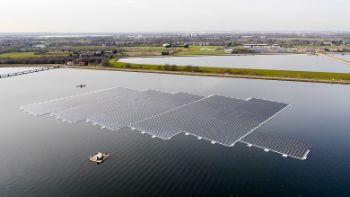
Aerial shot of the QEII Reservoir in Walton on Thames
The QEII reservoir, which stores around ten per cent of all the capital’s water, will be almost empty for the next year while essential maintenance is carried out.
The reservoir is one of the largest in the region and ordinarily holds 19,623 million litres of water - the equivalent of around 8,000 Olympic swimming pools.
By law reservoirs must be inspected at least every ten years and Thames Water is using the opportunity to carry out major work. Engineers will reline the two tunnels which feed water into the reservoir from the River Thames and carry it from there to the nearby Walton and Hampton treatment works, from where it is pumped to homes across London. The relining will strengthen the tunnels and prevent any future leaks.
Rachel Whiteman, Thames Water’s project manager, said:
“The QEII plays a really important role in the supply of top-quality drinking water for millions of people across Surrey and London so we have to make sure it’s safe and in good working order. We’re carefully managing the rest of our reservoirs in London to keep taps flowing so customers won’t see any impact on their water supply.”
Engineers will enter the tunnels through access shafts which will be constructed above each tunnel. One of the shafts will be within the boundary of the reservoir site while a second will be outside, requiring the Walton Road to be fully closed for two months from April 26 and down to a single lane with temporary traffic lights from June until December.
Work to drain down the reservoir started this week and is expected to take until June. The water will continue to go to the treatment works and on to customer taps to avoid any wastage.
Around six meters of water will be left in the bottom of the reservoir to support wildlife including nesting birds. It means the solar panels which float on the surface and generate renewable energy to power the treatment works, can also stay in place.


Sign In
