
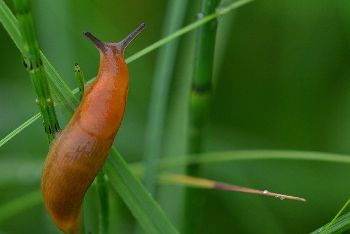
 The Department for Environment, Food & Rural Affairs has announced that the outdoor use of the pesticide metaldehyde which is used to control slugs on farms and in gardens, is set to be banned in the UK from the end of March 2022 in order to better protect wildlife and the environment.
The Department for Environment, Food & Rural Affairs has announced that the outdoor use of the pesticide metaldehyde which is used to control slugs on farms and in gardens, is set to be banned in the UK from the end of March 2022 in order to better protect wildlife and the environment.
The decision takes into account advice from the UK Expert Committee on Pesticides (ECP) and the Health and Safety Executive (HSE) about the risks that metaldehyde poses to birds and mammals.
Defra said that metaldehyde will be phased out by 31 March 2022 to give growers and gardeners "appropriate time" to switch to alternative slug control measures. Defra added that small quantities of product for gardens should not be disposed of at home and could be disposed of through local authority waste facilities.
While slugs can cause significant damage to farmers’ crops and gardeners’ plants, pesticides containing ferric phosphate can provide effective control without carrying the same risks to wildlife as metaldehyde slug pellets.
Alternative methods of pest control also include cultural techniques like planting slug resistant crop varieties, selectively timing irrigation and harvest and sowing seeds more deeply into the soil.
Announcing the ban, Farming Minister Victoria Prentis said:
“The scientific evidence is clear - the risks metaldehyde poses to the environment and to wildlife are too great.
“The government is committed to building back greener from Coronavirus and the restrictions on the use of metaldehyde are another step towards building a cleaner and greener country for the next generation.”
Decisions on the use of pesticides are based on scientific assessment of the risks in order to ensure they will not harm people or pose unacceptable risks to the environment.
The UK government introduced a ban on the sale of metaldehyde-containing slug pellets in summer 2019. Metaldehyde is a highly problematic compound for the water companies to remove from water in their catchments which requires energy-intensive treatment processes.
However, following a legal challenge, the ban was in place for just a month when it was overturned by a High Court decision in a Judicial Review on 31 July 2019.
A policy paper subsequently issued by Water UK acknowledged that it was “highly likely that low concentrations of metaldehyde could continue to be detected in the environment for a variety of reasons and that water companies would need to keep their catchment risk assessments under constant review.”
The organisation, the organisation which represents all the UK water companies, added that it shared the view of others that metaldehyde could become a potential barrier to water trading and could hamper efforts to improve resilience across the industry.
Water UK “absolutely shares the view of regulators that wide-scale investment in additional treatment processes at affected water treatment works is not a sustainable answer, and that the costs to customers and the environment (from a carbon perspective) are not acceptable”, the paper says.


Sign In
